
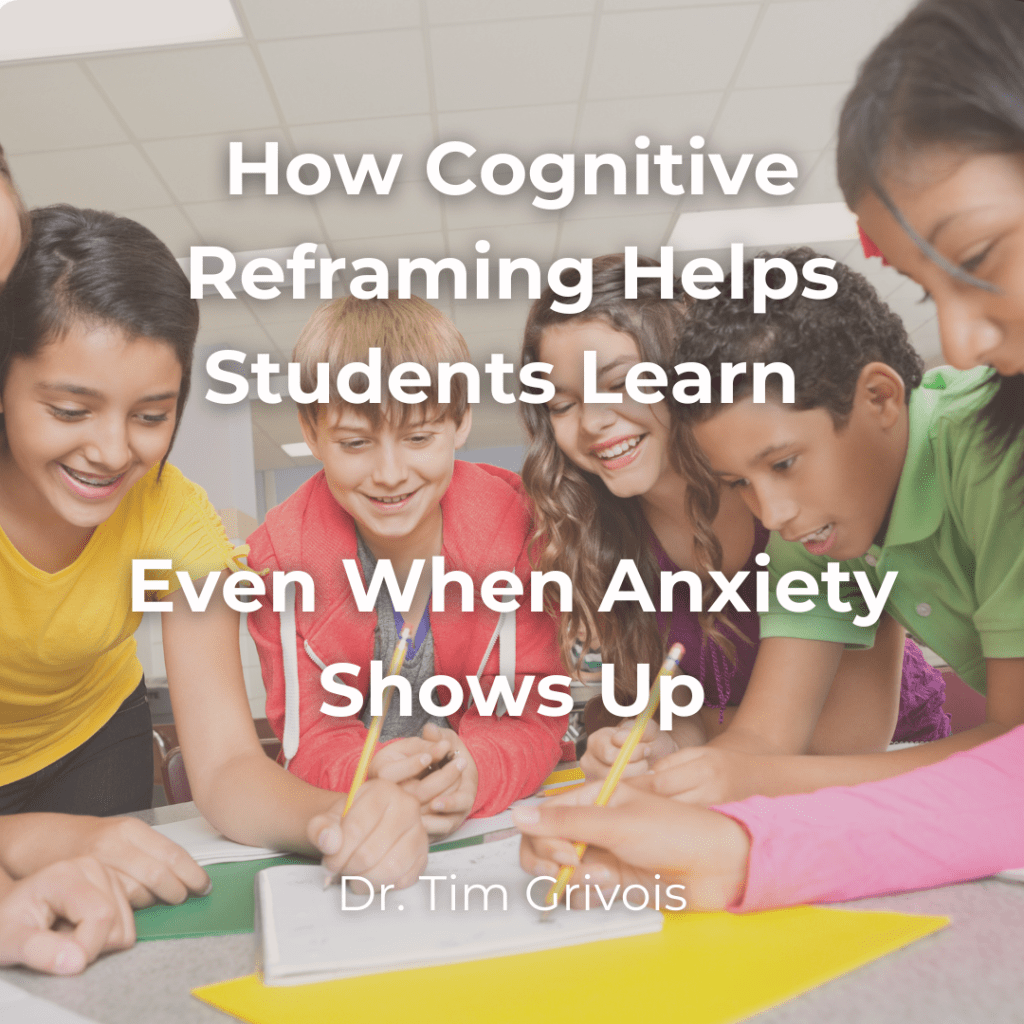
How Cognitive Reframing Helps Students Learn Even When Anxiety Shows Up
Having ADHD means having a brain wired for engagement. Research shows that children and youth diagnosed with ADHD face significantly […]
Having ADHD means having a brain wired for engagement. Research shows that children and youth diagnosed with ADHD face significantly […]

This fall, I’m hosting free, one-hour workshops for educators on Zoom. Together we’ll explore simple strategies for CICO, schoolwide interventions, and ADHD that make behavior support feel less like paperwork and more like a promise we can keep. All recordings and handouts are included.

Solution #1 for teacher recruitment and retention is salary and benefits, and that’s typically outside a principal’s control. However, what

Most Tier 2 behavior support systems fall short—not because educators aren’t working hard, but because the structure doesn’t support what matters most. This post explores how schools are shifting from point sheets to meaningful support, from compliance to connection, and from one-off trainings to sustainable, yearlong change.

If your PBIS matrix hasn’t changed in years, it might be time for a refresh. In this post, Dr. Tim Grivois shares why values like open-minded are showing up more often—and how to design a matrix that reflects your school’s real culture, includes every voice, and works in daily practice.
Positive Behavior Interventions and Support (#PBIS) is 60 years old, and while famous as a framework for behavior support, we’ll still often find practices that we can safely and briskly grow out of.
-by Tim Grivois, Ed.D. Much of my work with schools and nonprofits involves social and emotional learning (SEL). The reason
Self-awareness is, according to CASEL, the ability to “understand one’s own emotions, thoughts, and values and how they influence behavior across contexts.” Last week, I worked with a group of twelve teachers, counselors, and school leaders at Davis Bilingual Magnet Elementary School. Davis is a K-8 school in Tucson Unified School District and serves both Spanish-dominant and English-dominant emerging bilingual students. Our goal was to create something to help students understand and regulate emotions. What impressed me more, however, was how powerful our work became for teachers themselves.

Social and emotional learning is not extra. On the contrary, alongside academic mastery, social and emotional skills are essential to becoming successful learners and good human beings. Emotional regulation, in particular, is critical to maintaining good mental health and developing healthy relationships. Like all SEL skills, emotional regulation begins from the inside out and depends on developing a broad and nuanced vocabulary for naming and expressing emotions. Here are three classroom-possible strategies for developing emotional vocabulary.
Physical activity is the best intervention, with the most evidence of success in supporting the social, emotional, and academic achievement of students with ADHD.